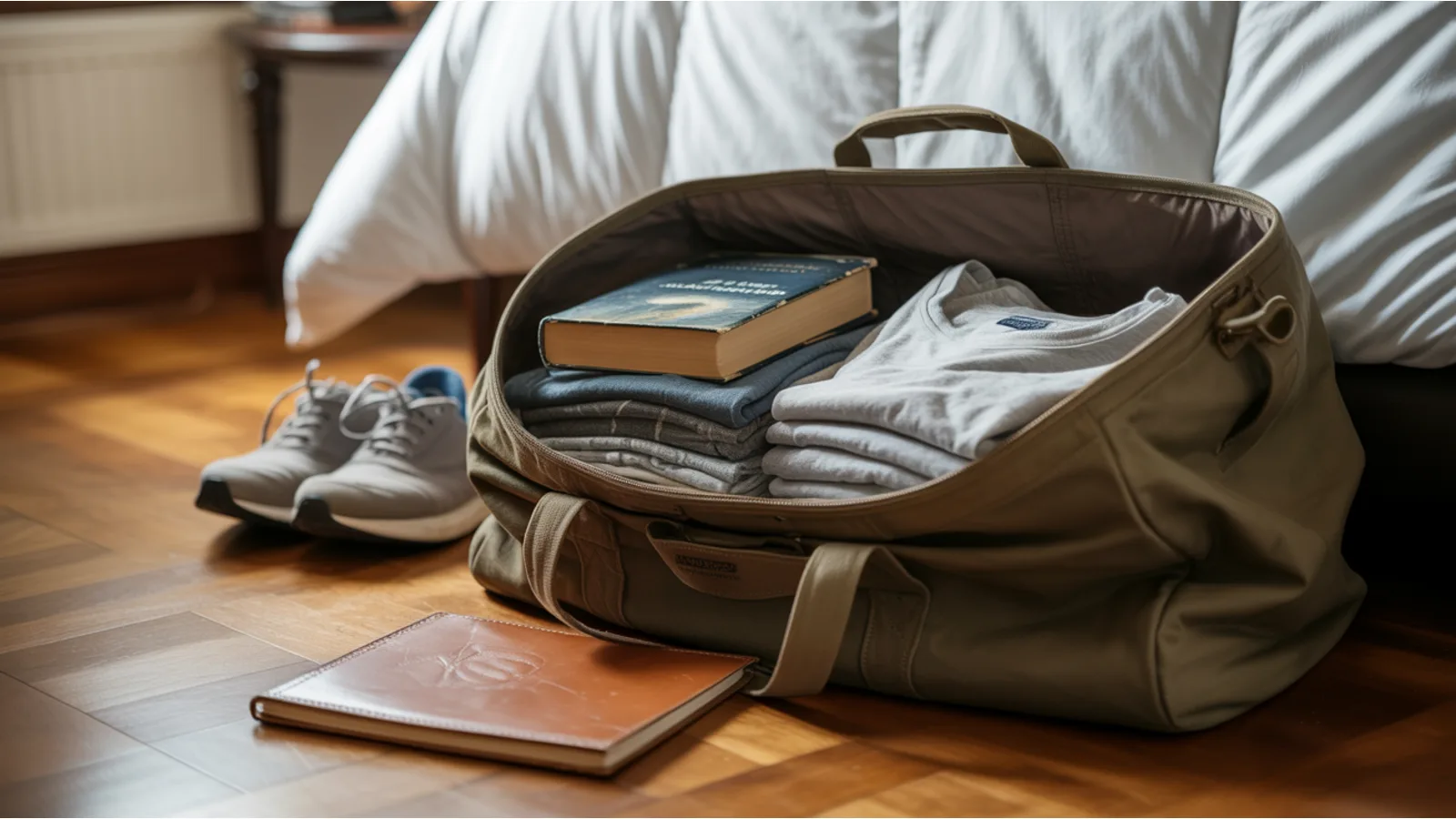
The packing question seems trivial until you are the one doing it. You are walking out of treatment, or out of your own apartment, or out of a situation that finally caught up with you, and you have an hour to figure out what fits in two bags and what stays behind. Most men show up to Realcovery Idaho having either packed too much, or too little, or both.
This is the honest version of the checklist. It is what residents and house managers actually wish you knew before you arrived.
Start With This: What the House Provides
Realcovery's sober living residences come furnished. You do not need to bring a bed, a dresser, kitchenware, towels, or linens for the most part. The kitchen is stocked with cooking basics. The bathroom has the essentials. House Wi-Fi is included.
This matters for two reasons. First, it saves you from showing up with a U-Haul. Second, the things that are shared (kitchen, laundry, common areas) are part of the structure that makes the house function as a household, not a collection of strangers in rented rooms. You contribute to that household; you do not duplicate it.
Clothing: Realistic and Practical
Pack for two weeks at minimum, and rotate through laundry. Twin Falls weather changes more than people expect. Summers reach the high nineties. Winters get into the teens. Spring and fall swing daily.
The minimum kit:
- Seven to ten t-shirts and casual shirts
- Two to three pairs of jeans or work pants
- One pair of dress pants and one button-down for interviews, meetings, court, or church
- A week of underwear and socks
- A warm hoodie or fleece
- A waterproof jacket
- One pair of comfortable walking or running shoes (you will use them)
- One pair of casual everyday shoes
- A pair of work boots if you have a job that requires them
- Pajamas or sleep clothes (the house has shared spaces; sleep clothes are not optional)
What to leave behind: any clothing with substance-promoting graphics, brand imagery from your old crowd, or anything you wore on the worst nights of your using. You will not miss them. Some men ceremonially get rid of them. Whatever works.
Documents: Bring These or Stall Your First Week
The most common first-week frustration at sober living is paperwork you do not have. Bring originals or copies of:
- State-issued photo ID or driver's license
- Social Security card (or know the number cold)
- Health insurance card
- Treatment discharge papers, if applicable
- Any current prescriptions in original labeled bottles
- Probation or parole paperwork, if applicable
- Court documents related to your case, if applicable
- A list of phone numbers (your phone might not survive the transition)
If you are missing ID, the Twin Falls DMV is on Pole Line Road and we will help you replace it during your first week. Getting back into the system is part of the work.
Technology: Yes to Phone, Limit the Rest
A phone is essential. You need it for meetings, job applications, calls with sponsors and family, and emergency contact. Bring it and the charger.
A laptop is fine if you need it for work or school. If you do not, leave it. Less screen time is healthier in early recovery, and most things you need a computer for can be done at the public library on Falls Avenue.
Gaming consoles, VR headsets, and similar entertainment systems are generally discouraged. Not because they are wrong, but because they tend to replace the connection-building work that early recovery requires. If isolation was part of your using pattern, screens are an easy substitute pattern. Talk to the house manager before bringing one.
Personal Items Worth Bringing
- A journal or notebook (gratitude lists, fourth-step work, processing)
- Pens that you actually like writing with
- A reusable water bottle (cravings are sometimes thirst)
- Headphones for meetings, podcasts, music
- A book or two (recovery literature, fiction, biographies of people you admire)
- One framed photo of someone you love (the reason this is worth doing the work)
- An alarm clock if you do not trust yourself with the phone next to the bed
What NOT to Bring
- Any substance. Any. Including kratom, kava, CBD, supplements with stimulant properties, or anything from a smoke shop you cannot fully account for. Houses do searches.
- Any prescription medication that is not yours, not current, or not in its original labeled bottle.
- Mouthwash with alcohol, hand sanitizer in large quantities, vanilla extract. Yes, really.
- Weapons of any kind.
- Pornography or printed material that conflicts with house values.
- Pets. Most houses cannot accommodate them. Plan for placement with family before you arrive.
- Cash in large amounts. A modest amount for the first week is fine; bring a debit card for the rest.
The Mindset Piece
What you pack signals what you expect. If you arrive with eight bags of belongings, you are quietly telling yourself you might leave in a week. If you arrive with two bags and a clear mind, you are giving the program a real chance.
Most men who have gone through Realcovery's program will tell you the same thing: bring less than you think you need. The first few weeks are not about comfort. They are about reset. You will accumulate what you actually need as you go.
Two bags. Real documents. Real intent. That is the only checklist that matters.
If you are getting ready to move in and want to confirm anything specific, our FAQ page covers most of the practical questions, or call the house at (208) 731-7354 and we will walk you through it. You can also submit an application if you have not already started that conversation.
You are about to start something that matters. Show up ready.